El Bulli
The restaurant that rewrote modern cooking. El Bulli on Spain's Costa Brava served 8,000 diners a season from two million requests. Ferran Adrià, foams, spheres and the 2011 closure.
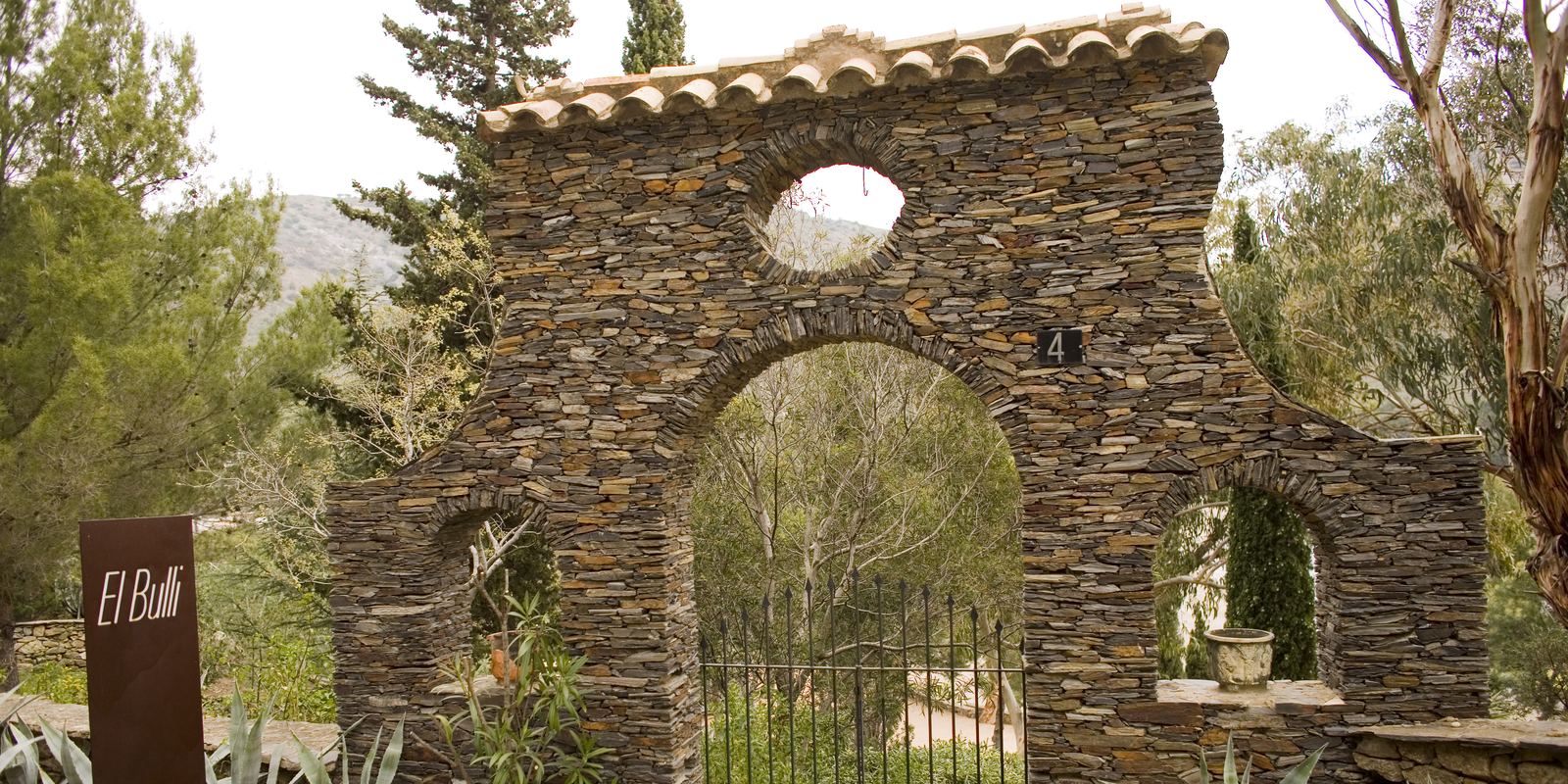
The El Bulli gate: Charles Haynes from Sydney, Australia, CC BY-SA 2.0
A beach bar becomes a legend
El Bulli overlooked Cala Montjoi, a quiet bay on the Costa Brava near the town of Roses in Catalonia. The site was chosen in 1961 by a German couple, Hans and Marketa Schilling, and the first restaurant opened in 1964.
Ferran Adrià joined the kitchen in 1984 and took sole charge in 1987, working with general manager Juli Soler and later his brother Albert Adrià. The restaurant gained its second Michelin star in 1990 and its third in 1997.
Reaching the restaurant meant a winding drive over the hills to a small, isolated cove. Diners often spent four hours or more at the table, and many described the journey and the setting as part of the experience.
Cooking as research
Adrià treated cooking like a creative laboratory. The restaurant closed for half of each year so the team could invent new dishes in a workshop in Barcelona. Techniques such as culinary foams, made with a siphon, and spherification, which forms liquids into delicate spheres that burst in the mouth, became famous through El Bulli.
Meals were long tasting menus of small, surprising courses designed to play with texture, temperature and expectation. Each season's dishes were catalogued in detail in books.
The kitchen worked closely with scientists, designers and suppliers to develop new tools and techniques, and the team kept detailed records of every experiment. Not every idea was hard to copy: siphons for foams and simple kits for spheres soon became common in professional and home kitchens around the world.
The hardest table in the world
El Bulli could seat only about 8,000 diners a season but received more than two million requests. Restaurant magazine ranked it the best restaurant in the world a record five times, in 2002, 2006, 2007, 2008 and 2009.
Despite the fame, the restaurant itself lost money from 2000 onwards. Income came instead from books, lectures and other projects linked to Adrià's work.
Closing and reinventing
El Bulli served its last dinner on 30 July 2011. Adrià turned the project into the elBulli Foundation, a centre for culinary creativity and research, and the site later reopened as a museum-style space about the restaurant's history.
Many chefs who trained there went on to run acclaimed restaurants of their own, which is one reason El Bulli is still seen as one of the most influential kitchens of modern times.
- The El Bulli gate: Charles Haynes from Sydney, Australia, CC BY-SA 2.0
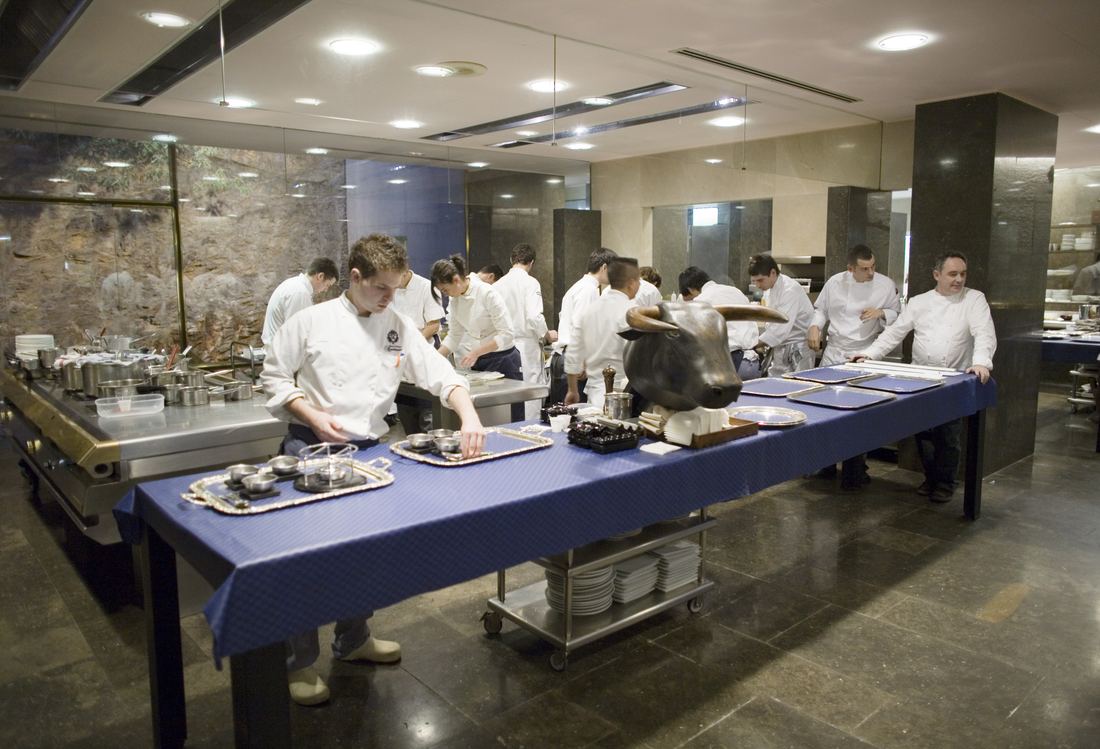
- The El Bulli kitchen: Charles Haynes from Sydney, Australia, CC BY-SA 2.0
Text written by Greatest Prestige.